
6 Common Mistakes During Your Period, Ranked by Severity
Share
You've had your period for years, so you think you already know everything about it. Yet, some facts about menstruation remain surprisingly unknown, even among those who experience it every month.
We have ranked six of these facts from the best known to the most surprisingby verifying each of them rather than repeating what usually circulates without solid evidence behind it.
💡 The Ranking in Brief
The Ranking, From Best Known to Most Surprising
The cold could affect your cycle
⚠️ Weak evidenceMany women report longer or more painful periods in winter. The proposed mechanism—less natural light, therefore less production of certain regulatory hormones, and vasoconstriction that slows pelvic circulation—remains plausible.
The important nuance
A 2011 study measured cycles that were approximately 0,9 days shorter in summer than in winter, a real but modest difference. However, regarding the abundance of menstrual flow, the evidence remains primarily based on personal experience reported on health websites, not on large-scale, objective measurements. It's intentionally placed last, as it's the closest thing to a myth on this entire list.
Your voice may change slightly
Fluctuations in estrogen and progesterone also affect the vocal cords, which retain slightly more water just before and during menstruation. This phenomenon, documented in phoniatrics as premenstrual vocal syndrome, primarily affects professional singers who may experience a loss of pitch or power on some notes during this period, without it being audible in normal conversation.
The total over a lifetime is impressive
Between her first period and menopause, a woman experiences an average of 450 to 500 cycles in her lifetime. Added together, this represents nearly 7 to 10 cumulative years of menstruation, and several thousand sanitary products used if we consider disposables. From this perspective, choosing menstrual protection becomes almost a lifelong decision rather than a monthly detail.
Your ancestors had their first periods much later
In France, the average age of first menstruation was around 16 in 1750. By 1950, it had dropped to 13-14. Today, the average is around 12 and a half. This increase is mainly due to improved nutrition and sanitation across generations, as adipose tissue plays a direct role in the production of estrogen, which triggers puberty.
You're losing far less blood than you think.
Despite the impression of a heavy flow, the average blood loss over the course of a cycle is around 60 ml, or barely 3 to 4 tablespoons. Anything over 80 ml falls under the medical definition of a heavy period. If you feel like you're losing significantly more than that each cycle, it's worth talking to a doctor rather than simply getting used to it.
You can get pregnant during your period
This one comes out on top because it's probably the fact with the most concrete, practical consequences. The idea that menstruation automatically protects against pregnancy is deeply ingrained, yet false in certain situations.
Sperm can survive for up to 5 days in the reproductive tract. If your cycle is short, you have intercourse towards the end of your period, and you ovulate earlier than average that month, fertilization is still entirely possible. It's not the most common scenario, but it's not an urban legend either.
What does this change in concrete terms?
If you don't want to get pregnant, you still need protection even during your period. If you're trying to conceive, don't rule it out just because you're still bleeding.
Thousands of sanitary pads over a lifetime, or a few reusable panties
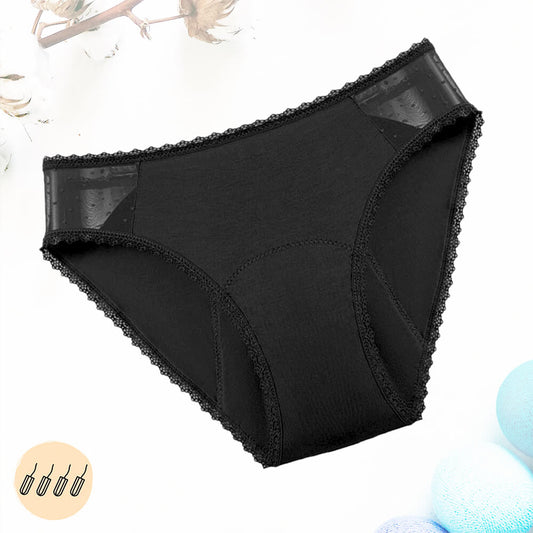
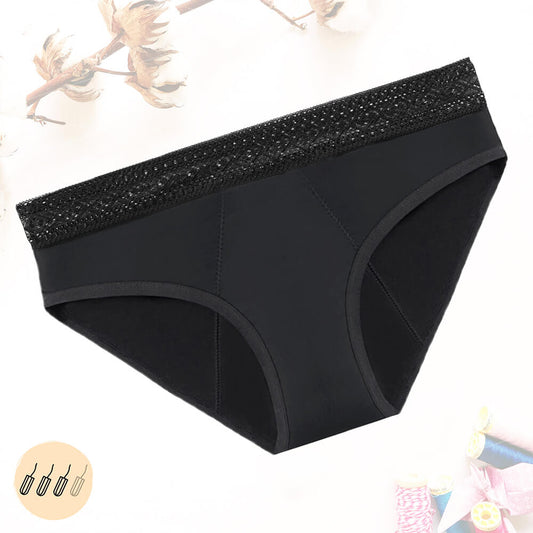
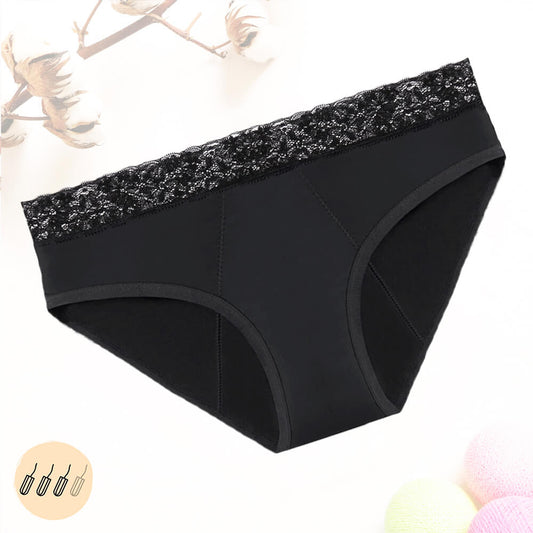
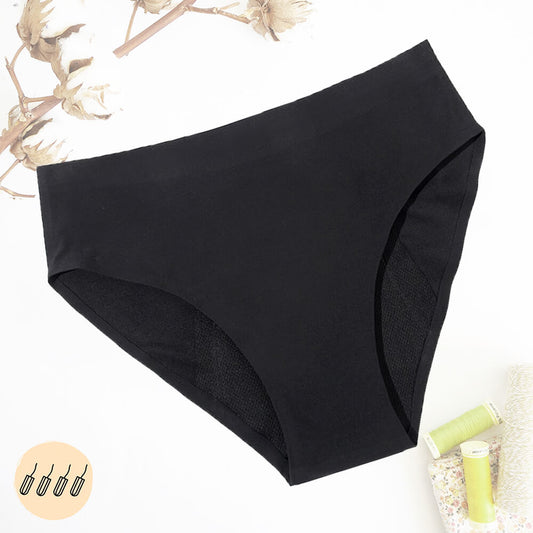
If the calculation in fact number 4 struck you, know that there is a simple alternative. Our period panties can be washed and reused for years, for a fraction of the number of disposable products you would use over a lifetime.
Your body is still teaching you things after all these years.
Even after years of menstruation, there are still some unknown mechanisms behind what seems like a well-understood routine. Some of these facts mainly change your perspective, such as the actual volume of blood lost or the historical evolution of the age of menstruation onset. Others have a real practical impact, particularly regarding fertility during menstruation.
The best reaction to a surprising fact about your own body is curiosity rather than worry. Your cycle will continue to surprise you from time to time, and that's actually good news; it means there are still things to understand about what your body is doing, month after month.
Sources & References
- National Institute for Demographic Studies (INED). The age of first menstruation. Ined.fr
- Hartmann BR, et al. (2011). Seasonal variation in menstrual cycle length. Study cited on the difference of 0,9 days between summer and winter cycles.
- American College of Obstetricians and Gynecologists (ACOG). Heavy Menstrual Bleeding. The threshold of 80 ml was retained for the medical definition of menorrhagia. ACOG.org
- Abitbol J, Abitbol P, Abitbol B. (1999). Sex hormones and the female voice. Journal of Voice, a basic reference on premenstrual vocal syndrome.
Note: This article is for informational purposes only. The figures cited are averages, which naturally vary from woman to woman.