
Seed Cycling: Is This Method Really Worth Trying?
Share
You may have come across seed cycling on TikTok or Instagram, this practice which consists of eating certain seeds during the first half of your cycle, then others during the second, to "balance your hormones naturally". Before you fill your cupboard with flax and sunflower seeds, here's what science really says.and the answer is more nuanced than the promises circulating online, without being a total scam.
We explain the exact protocol to you, what is based on real studies, and what remains for now an attractive theory without solid evidence behind it.
💡 Key Takeaways
The Exact Protocol, To Understand What We're Talking About
The basic idea is based on the two main phases of your cycle. During the follicular phase, from approximately days 1 to 14, estrogen dominates. During the luteal phase, which follows ovulation, progesterone takes over. The theory of seed cycling involves providing, through diet, nutrients designed to support each of these hormones at the time when it is supposed to be dominant.
| Phase | Grains | Targeted nutrient |
|---|---|---|
|
Follicular Days 1 to 14 |
Flaxseed + pumpkin (1 tbsp each, ground) | Lignans, zinc |
|
Luteal Days 15 to 28 |
Sunflower + sesame (1 tbsp each, ground) | Vitamin E, selenium, lignans |
What is truly based on studies
This is where the nuance matters. Some elements of seed cycling have a real scientific basis, not on the complete protocol, but on seeds taken in isolation.
✅ Flaxseed and the luteal phase
A landmark study, conducted in 1993 on 18 women with normal cycles, showed that by consuming 10g of ground flaxseed daily for three cycles, none experienced an anovulatory cycle, compared to three cases in the control group. The luteal phase was also significantly longer. It's a small study, but it forms the strongest basis for the entire practice of seed cycling.
✅ Vitamin E against premenstrual syndrome
A more recent randomized clinical trial showed that vitamin E supplementation significantly reduced the physical and emotional symptoms of PMS. Sunflower seeds naturally contain vitamin E, making this part of the protocol more credible than average.
✅ Zinc and ovarian function
Zinc deficiency is associated with menstrual irregularities in nutritional literature. Pumpkin seeds are a good source of zinc, which justifies their inclusion in the follicular phase, although this does not prove a specific effect related to the timing of consumption.
What Remains of the Theory, Not of the Proof
⚠️ The point that wellness accounts always forget to mention
No clinical trial has ever tested the entire rotation protocol on a group of women strictly following this 4-seed schedule, compared to a control group. All the cited evidence concerns isolated seeds, studied separately, often for purposes other than synchronization with the menstrual cycle.
A more recent study of 90 women with PCOS showed interesting hormonal improvements, but the intervention often combined seed cycling with a broader dietary framework, making it difficult to isolate the exact role played by the seeds themselves.
Even the prestigious journal Scientific American, in investigating the subject directly, concludes that the practice remains largely unproven as a complete protocol, despite the individual strength of some of the nutrients that compose it.
Should We Still Try?
The real calculation here is simple: the risk is minimal since we're talking about food, and some of its components have genuine nutritional value regardless of any effect on your cycle. Seed cycling can therefore make sense as a pleasant dietary supplement, not as a miracle cure for a real hormonal imbalance.
⚠️ What it can never replace
If you have PCOS, endometriosis, very irregular cycles, or premenstrual syndrome that really disrupts your daily life, seed cycling is not a substitute for medical care. It can be used in addition to treatment, but never as a replacement.
How to Try It Out in Practice
- Grind the seeds before consuming them • whole, they pass through your digestive system without releasing their nutrients
- One tablespoon of each seed That's enough; there's no need to abuse it for any potential benefit.
- If your cycle is irregular • Base your schedule on a fixed 28-day calendar rather than waiting for your actual period to change seeds
- Give yourself 2 to 3 cycles Before judging any potential effect, allow time for your body to adjust to a new, regular intake.
While You Observe Your Cycle
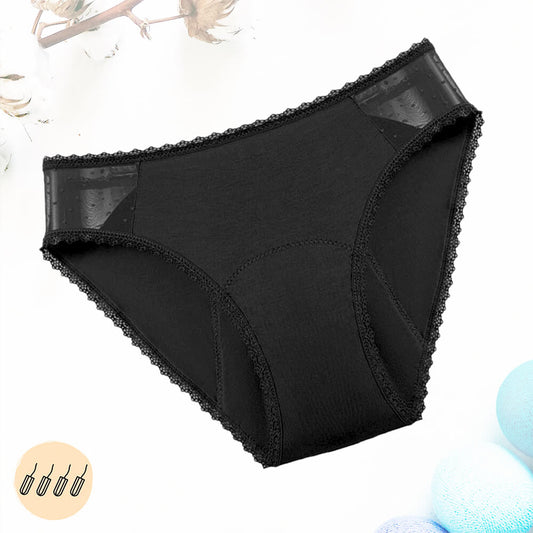
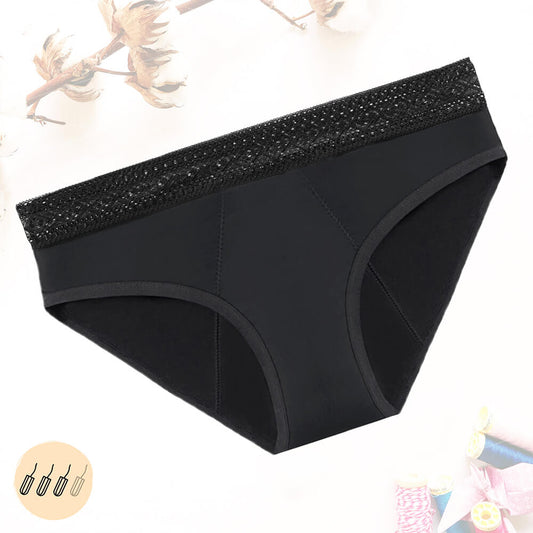
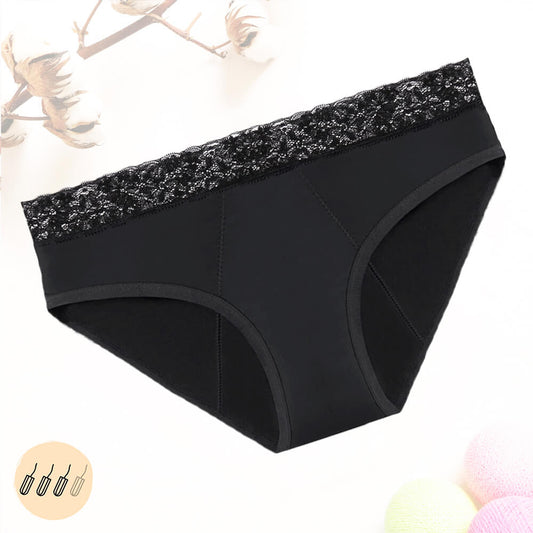
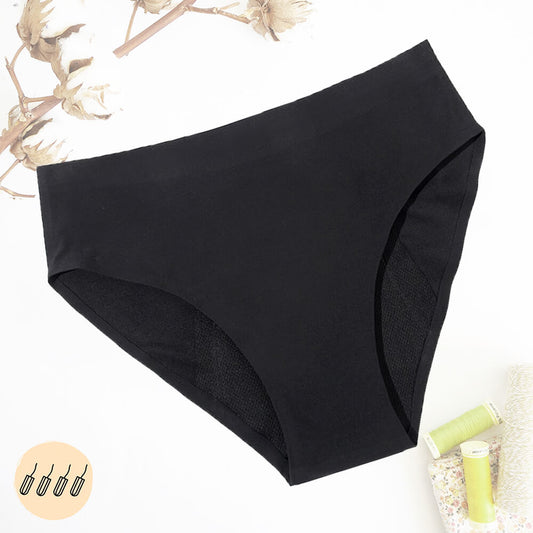
If you're trying seed cycling, it's a good idea to also track your periods to identify any real changes rather than just a feeling. Comfortable period underwear will support you during this observation phase, without adding anything extra to manage.
Useful Seeds, An Overvalued Promise
Seed cycling is neither a complete scam nor a proven science. It's a practice built on fragments of real evidence—flax and the luteal phase, vitamin E and PMS, zinc and ovarian function—assembled into a protocol that has never been tested as such. The seeds themselves remain nutritionally valuable, regardless of when you eat them.
If you like the idea, there's nothing stopping you from trying it; the risk is minimal. Just keep in mind that it's a pleasant dietary habit to try, not a proven treatment for a real hormonal imbalance.
Sources & References
- Phipps WR, Martini MC, Lampe JW, Slavin JL, Kurzer MS. (1993). Effect of flax seed ingestion on the menstrual cycle. The Journal of Clinical Endocrinology & Metabolism, 77 (5), 1215-1219. DOI: 10.1210/jcem.77.5.8077314
- Paknahad Z, Maracy MR, Saneei P, Nezamoleslami S. (2017). The effect of vitamin E on premenstrual syndrome, a randomized controlled trial. International Journal of Reproductive Biomedicine, 15 (7), 423-428. PubMed: 28920088
- National Institutes of Health, Office of Dietary Supplements. Zinc, Fact Sheet for Health Professionals. ODS.od.nih.gov
- Lemonick S. (2024). Does Seed Cycling Help Balance Hormones? Scientific American magazine. ScientificAmerican.com