
Exercising During Your Period: Good or Bad Idea?
Cramps, fatigue, the couch calling your name, and yet everyone keeps telling you that you need to exercise during your period. This is partly true. Several recent studies confirm that Exercise actually reduces menstrual painBut some of what you read on the subject, shocking statistics and miracle advice on the ideal phase of the cycle to train, goes well beyond what studies actually show.
What is solid, what remains debated among researchers themselves, and above all, how to move without forcing yourself or feeling guilty if you don't want to.
The type of exercise matters less than consistency. The most robust studies show results over several weeks of practice, not from a single session on the day.
What Is Truly Proven Against Cramps
Regarding period pain and dysmenorrhea, the research is solid and quite consistent. All types of exercise tested in recent studies reduce pain, and guided relaxation even comes out on top, ahead of yoga and traditional cardio. There's no need to force yourself to run if you don't feel like it.
The most important detail to remember is that the best results come from programs followed over the long term, at least 8 weeks, with 3 sessions per week of about thirty minutes each. In other words, it's not the rushed workout on the first day of your period that makes the difference, but a regular practice established over several months.
Why it works Exercise increases beta-endorphins, which act as natural painkillers, and improves pelvic circulation. It also reduces certain inflammatory markers associated with pain. Nothing magical, just physiology that is confirmed study after study.
The Myth of the Ideal Phase for Performance
You've probably already read that you should train hard in the first part of your cycle, right after your period, because estrogen levels are supposedly at their peak for building strength and muscle. This advice is widely circulated in fitness content. The problem is that the most recent research seriously challenges it, and this is still being confirmed in 2026.
What we often hear
The follicular phase is clearly superior for gaining strength and muscle mass; intense training should be timed around it.
What the data shows
An umbrella review reanalyzed all existing meta-analyses and found effects deemed "trivial", too weak to form the basis of a real recommendation.
Several researchers recently reviewed all available studies on this topic, and their conclusion is clear: the effect of the cycle phase on strength or muscle gains is too weak and too inconsistent from one study to make it a true training rule. Another review focusing on elite female athletes even found outright contradictory results across studies.
💬 A very recent study confirms
A study published in May 2026 in the Journal of Strength and Conditioning Research The study directly tested the effect of menstrual cycle phase on anaerobic power (Wingate test) and perceived exertion in women with normal cycles. The result: no significant difference between phases. This is further evidence consistent with previous reviews.
It's not that the idea is entirely wrong; some small, isolated studies show a slight advantage during the follicular phase. But this effect remains too weak and inconsistent to justify reorganizing your entire training around your cycle. If you feel stronger on certain days, listen to it. If you feel guilty about not following this schedule to the letter, you can definitely give up.
Sport and Premenstrual Syndrome: Science Is More Cautious Than We Say
This is where much online content gets a little carried away. The most cited study on exercise and PMS, conducted by a researcher at the University of Birmingham, is regularly summarized as solid proof that exercise makes premenstrual symptoms disappear. Its actual conclusion is more modest; it points to a lack of robust data on the subject and calls for more research. A more recent analysis generally arrives at the same cautious conclusion: a positive signal exists, but the available studies remain of uneven quality.
This doesn't mean that exercise doesn't help with premenstrual symptoms like fatigue, irritability, and bloating. More recent studies have found a link between regular physical activity and less pronounced symptoms. But the dramatic, rounded figures sometimes circulating, such as "50% reduction," are based on the scientific literature available to date. Exercise probably helps, but moderately; it's not a miracle cure.

When Sport Becomes the Problem, Not the Solution
This is the part you rarely read in articles that tout the benefits of exercise during menstruation. At the other extreme of the spectrum, too much exercise combined with an insufficient diet can completely disrupt, or even stop, your period.
The mechanism is called the relative energy deficit of exercise, or RED-S. When the body doesn't receive enough calories to cover both its basic needs and the energy expended during training, it puts certain functions deemed non-essential in the short term on hold, including reproduction. The result is a drop in reproductive hormones that can lead to the complete cessation of menstruation, a condition known as amenorrhea.
This is not marginal · Menstrual disorders linked to this imbalance affect approximately 20% of active female athletes in general, a figure that rises to 44% among dancers and 51% among endurance runners according to data compiled in a 2022 review. The absence of periods is never a positive sign of fitness, even if it is sometimes presented as such in certain sporting circles.
This doesn't concern the casual athlete who takes a 30-minute walk during her period, rest assured. The risk mainly involves intense and repeated training over time, combined with insufficient calorie intake. If your periods become irregular, lighter, or disappear altogether while you're training a lot, it's not insignificant; it's worth discussing with a doctor rather than viewing it as a normal side effect of your level of physical activity.
How to Move Smartly During Your Period
In practice, here's what emerges from all this. No magic formula, just a reasonable approach based on what studies actually confirm.
Aim for consistency rather than occasional intensity. · The benefits against cramps come from a practice spread over weeks, not from a single session on the day of your period.
Give guided relaxation a try · surprisingly effective in recent studies, and accessible even on days when the idea of sweating doesn't appeal to you at all.
Adjust the intensity daily, not according to a theoretical schedule of cycle phases which has not shown a solid effect on performance.
Monitor your period over time If you are training intensely, cycles that become less frequent or disappear are never a detail to ignore.

And most importantly, if you don't feel like exercising on a day of your period, it's not a failure. No study says that skipping a workout during your period negates weeks of regular practice. The body's need for rest has its reasons.
Move Freely, Whatever Your Flow
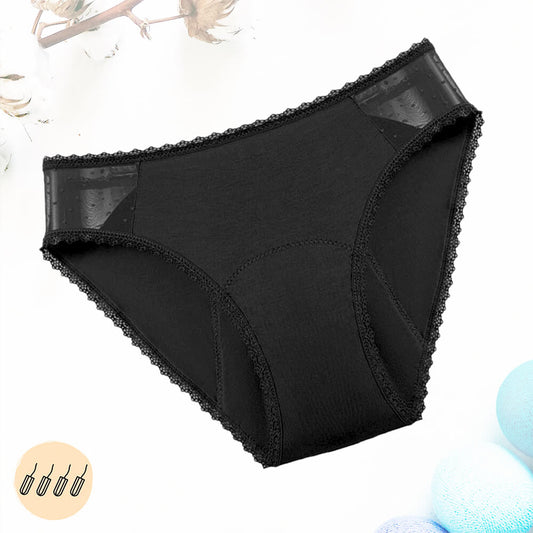
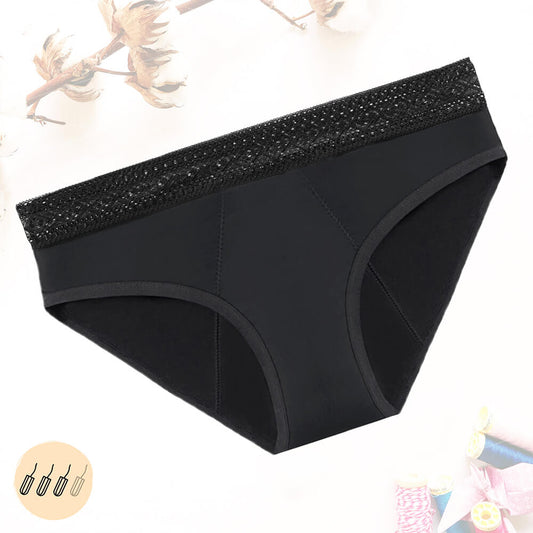
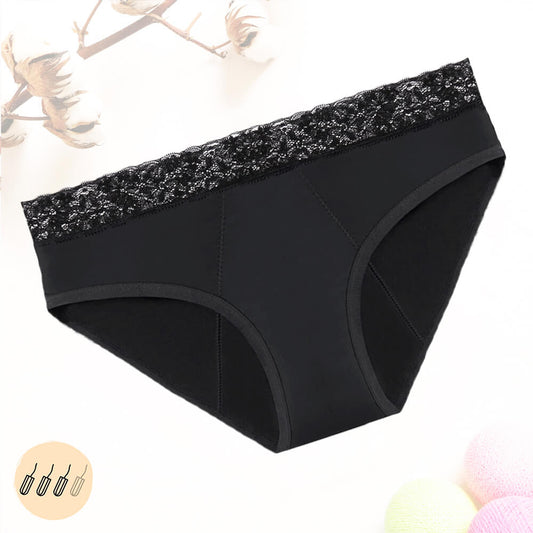
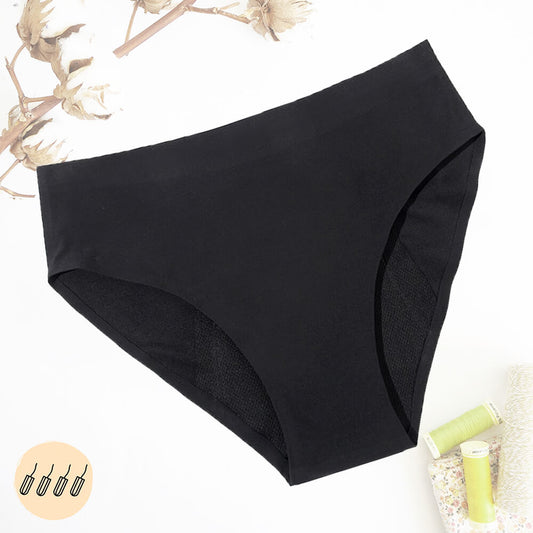
Our period panties offer secure support during exercise, without fear of leaks, so you can focus on your workout rather than your protection.
Frequently Asked Questions
Move, yes, but without dogma.
Exercise really does help with period pain; science consistently confirms this. The rest—the perfect phase calendar, the spectacular PMS statistics—deserves to be taken with a grain of salt. The best exercise during your period is simply whatever you feel like doing that day, nothing more, nothing less. And the real warning sign isn't missing a session, but seeing your period become irregular from overdoing it.
Sources & References
- Lin YH, et al. (2024). Comparative Effectiveness of Different Exercises for Reducing Pain Intensity in Primary Dysmenorrhea, A Systematic Review and Network Meta-analysis. Sports Medicine - Open. DOI: 10.1186/s40798-024-00718-4
- Zhang Y, et al. (2025). Efficacy and safety of therapeutic exercise for primary dysmenorrhea, a systematic review and meta-analysis. Frontiers in Medicine. DOI: 10.3389 / fmed.2025.1540557
- Mihalache A, et al. (2023). Current evidence shows no influence of women's menstrual cycle phase on acute strength performance or adaptations to resistance exercise training. Frontiers in Sports and Active Living. DOI: 10.3389/fspor.2023.1054542
- Lambright KR, et al. (2026). No Effect of Menstrual Cycle Phase on Wingate Power Outputs or Perceived Exertion in Eumenorrheic Women. Journal of Strength and Conditioning Research. DOI: 10.1519/JSC.0000000000005503
- Daley A. (2009). Exercise and premenstrual symptomatology, a comprehensive review. Journal of Women's Health. DOI: 10.1089/jwh.2008.1098
- Pearce E, et al. (2020). Exercise for premenstrual syndrome, a systematic review and meta-analysis of randomized controlled trials. BJGP Open. DOI: 10.3399/bjgpopen20X101032
- Dózsa-Juhász O, et al. (2023). Investigation of premenstrual syndrome in connection with physical activity, perceived stress level, and mental status. Frontiers in Public Health. DOI: 10.3389/fpubh.2023.1223787
- Holtzman B, Ackerman KE. (2022). Relative Energy Deficiency in Sport (RED-S), Scientific, Clinical, and Practical Implications for the Female Athlete. German Journal of Sports Medicine. DOI: 10.5960/dzsm.2022.541