
Period Panties for Heavy Flow: What Works (and What Leaks)
Share
"Maximum absorption," "XXL protection"—product descriptions all promise the same thing without ever providing any real guidance. As a result, you buy randomly and discover in the middle of the day that it's not enough.
Here's how to concretely assess your feed, and what to really check before buying, rather than relying on marketing adjectives.
The Essentials to Remember
- A flow is considered heavy starting at 80 ml over the entire cycle; a simple scoring system allows you to estimate it.
- A pair of "heavy flow" period panties typically absorbs the equivalent of 3 to 4 regular tampons.
- Nighttime capacity must be greater than daytime capacity, due to the prolonged lying position.
- Combining two forms of protection on certain days remains a perfectly legitimate option.
- A very heavy flow of blood warrants a consultation with a doctor, not just being managed with extra protection.
First, really evaluate your cash flow.
"Heavy" remains subjective until you have a real reference point. A medically validated score allows you to objectively estimate your flow level, based on the number of sanitary products used and their degree of saturation over the course of your period.
What "High Absorption" Really Means
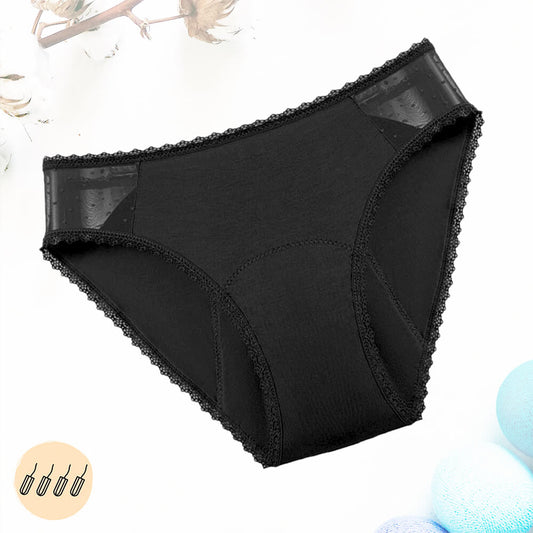
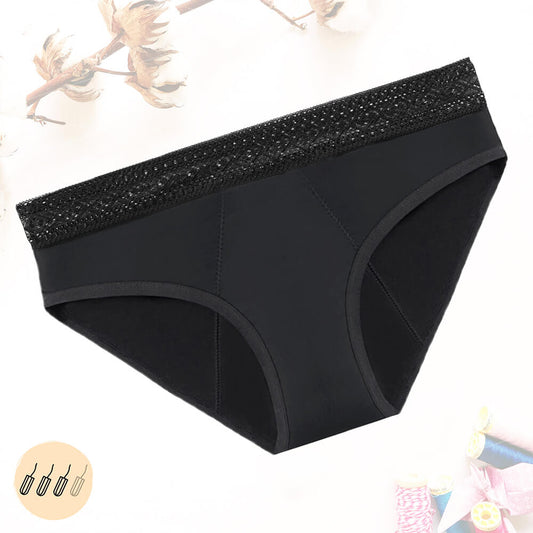
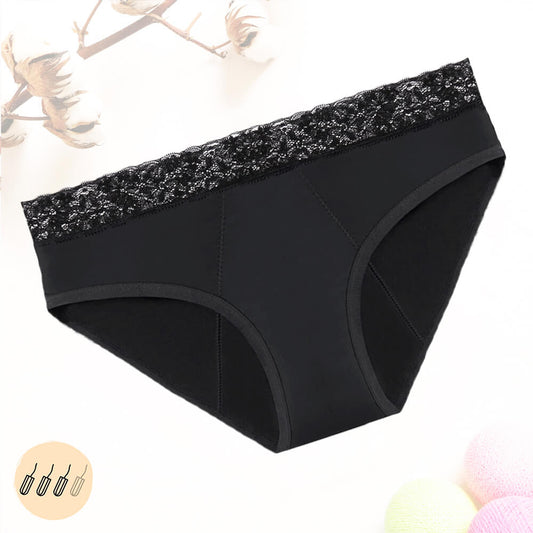
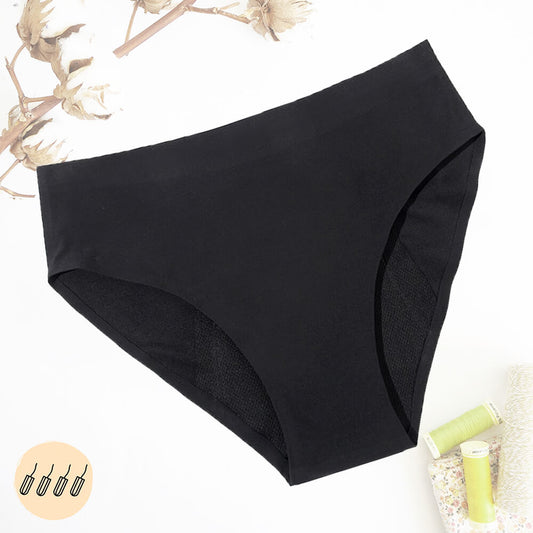
Rather than relying on the marketing name, look at the advertised capacity in tampon equivalents or in milliliters if specified. Underwear designed for heavy flow generally absorbs the equivalent of 3 to 4 regular tampons, compared to 1 to 2 for a light flow model.
The 3 Layers That Really Make a Difference
Beneath what looks like simple underwear lies a small, three-layered technical system. Understanding their function helps you distinguish a good product from a less good one, rather than relying solely on the marketing on the packaging.
1. The surface layer
In direct contact with the skin, its role is to wick away moisture to the next layers as quickly as possible, maintaining a feeling of dryness despite the flow. The faster it acts, the less surface moisture you feel.
2. The absorbent layer
It is this that determines the model's true capacity. The denser and better designed it is, the more it retains the liquid without releasing it, even under the pressure of prolonged sitting.
3. The waterproof layer
The final barrier that prevents any leakage into clothing. During a heavy flow, this is the part that undergoes the most pressure; its quality truly makes the difference between reliable underwear and underwear that disappoints after a few hours.
For heavy flow in particular, choose models where these three layers are clearly mentioned in the product description. A complete lack of information on the composition of the absorbent layer is often a sign that it wasn't designed for heavy flow.
💬 The detail that counts
An absorbent layer that's too thick isn't always a sign of better absorbency. Reputable manufacturers favor several thin layers rather than one thick one, to maintain a discreet profile under clothing while maximizing actual absorbency.
The Absorbent Zone
It must be wide at the front AND rear, not just in the center, to cover the frequent lateral spills in case of heavy flow.
La Taille Haute
It comes up higher on the stomach and covers more of the back, reducing the risk of leakage at the back, particularly when sitting.
Day and night are not managed the same way.
Lying down for 7 to 8 hours allows blood to flow differently than when sitting or standing. A "daytime" panty might be sufficient during the day but completely leak at night, even with the same flow. Look specifically for a "nighttime" model with an extended absorbent area at the back if you regularly wake up with a stain on your sheet.
Combining Two Protections: A Legitimate Option
On the heaviest days, wearing period underwear in addition to a menstrual cup or tampon is by no means a failure. It's actually a common practice among women with very heavy flow, who prefer the security of a double system rather than changing their protection every hour.
When the Subject Goes Beyond the Choice of Protection
If you change your protection every hour, regardless of the model chosen, if you lose large blood clots tailleOr, if you're experiencing unusual fatigue related to your period, the solution might not be more absorbent protection but a proper medical consultation. A truly excessive flow can have an underlying cause that needs to be treated, not just managed.
Causes and Treatments of Heavy Periods →
Frequently Asked Questions
How long can I wear heavy flow underwear?+
Theoretically up to 12 hours, but with a really heavy flow, it's better to check earlier the first few times to know your own saturation rate, before fully relying on this maximum time.
Do Period Panties Thongs Work on a Heavy Flow?+
Their absorbent area is rarely too small for a heavy flow. They are better suited for periods or light flows, and should be reserved for supplementary rather than primary use on heavy days.
How can I tell if my underwear is really saturated?+
A feeling of surface dampness, not just in the center, is the most reliable indicator. Initially, regular visual checks will help you identify your own threshold before it becomes a visible leak.
Choose with Criteria, Not Adjectives
Absorbent zone, taille High performance, day or night capacity—these are the concrete criteria that make the difference, not the word "maximum" on the label. And if, despite everything, nothing is truly sufficient, the issue may go beyond simply choosing the right protection.