
Heavy Periods (Menorrhagia): No, You Don't Have to "Deal With It"
You change your protection every hour, you wear double protection for safety, and you've been wondering for a long time if it's just "you who have heavy periods" or if there's something to investigate. The good news is that there is a real medical definitionIn about half of the cases, the causes are identifiable, and there are treatments that actually work. The downside is that many women live with this for years without ever daring to speak openly about it to a doctor.
Here we explain what objectively defines heavy periods, how to distinguish them from a simply copious flow, all the possible causes classified by frequency, and the concrete treatments that exist today depending on your situation.
💡 Key Takeaways
What Truly Defines Abundant Periods
Doctors speak of menorrhagia, or heavy menstrual bleeding, when the blood loss exceeds 80 ml per cycleThis is significantly more than the usual average of around 60 ml. This definition exists, but in practice, nobody measures their flow to the milliliter in their daily life.
That's why the definition adopted by international learned societies remains primarily functional: bleeding that interferes with your physical, social, emotional, or material quality of life. If your period prevents you from living normally, it counts as heavy, regardless of the exact amount.
To help you find your way around
With 60 ml of bleeding per cycle, it takes about 4 hours for a standard tampon or pad to need changing. If you have to change your protection every hour, day and night, or if you always wear double protection for extra security, you're probably above average.
Signs That Confirm It's Not Just in Your Head
- Change your protective gear every hourday and night
- Having to have two forms of protection at the same time to prevent leaks
- Periods that last more than 7 days consecutive
- The presence of large clots of blood, wider than a coin
- Signs of anemia • unusual fatigue, shortness of breath with minimal exertion, dizziness, paleness
This last point deserves further attention. Significant blood loss, repeated monthly, gradually depletes the body's iron stores, which can lead to iron-deficiency anemia. If you feel constantly tired without a clear explanation, or if you get out of breath climbing even a simple flight of stairs, it's worth having your ferritin levels checked with a blood test, regardless of your period.
All Possible Causes, Ranked by Frequency
Doctors use an international classification called PALM-COEIN to organize the possible causes of heavy bleeding, separating those that come from a structural abnormality of the uterus and those that do not.
⚠️ The often overlooked point
If you are taking an oral anticoagulant for another medical reason, be aware that these medications significantly increase the risk of heavy periods, particularly in women under 50. A recent study showed an almost doubled risk in younger users compared to non-users, with rivaroxaban associated with the highest risk among the different molecules. If this applies to you and your periods have become unmanageable since starting treatment, talk to your doctor; there are solutions that don't require stopping your anticoagulant.
How the Diagnosis Works in Practice
Before your appointment, the best thing to do is to record your cycles for the next 2 to 3 months, including start and end dates, the intensity of your periods, and the number of sanitary products used per day. This concrete information greatly helps your doctor to guide the examinations.
Blood test
Blood count and ferritin to check for possible anemia, sometimes a hormonal assessment depending on the context.
Pelvic ultrasound
To look for fibroids, polyps, or signs of adenomyosis.
Hysteroscopy or endometrial biopsy
Reserved for certain situations, particularly beyond 45 years of age, to directly examine the uterine lining.
Treatments That Actually Exist

First-Line Drug Treatments
- Nonsteroidal anti-inflammatory drugs Ibuprofen, taken at the start of menstruation, can reduce the volume of bleeding in addition to relieving cramps.
- Tranexamic acid • an antifibrinolytic that directly slows bleeding, taken only during the heaviest days
- Birth control pill or hormonal patch • reduces the growth of the uterine lining and therefore the volume of menstrual flow
- Levonorgestrel hormonal IUD One of the most effective long-term options is that some women see their periods become minimal or even disappear.
If a Structural Cause Is Identified
- Removal of a polyp or fibroma • targeted intervention that removes only the responsible element
- Uterine artery embolization • a non-surgical technique that reduces blood flow to fibroids
- Endometrial ablation or hysterectomy · reserved for severe cases that do not respond to other treatments, especially in women who no longer wish to have children
An important point if you're taking medication for anemia: don't consider it a side effect. Oral iron often needs to be taken for several months to replenish iron stores, and many women stop too soon because they feel better after only a few weeks.
Protection Designed for Really Heavy Flows
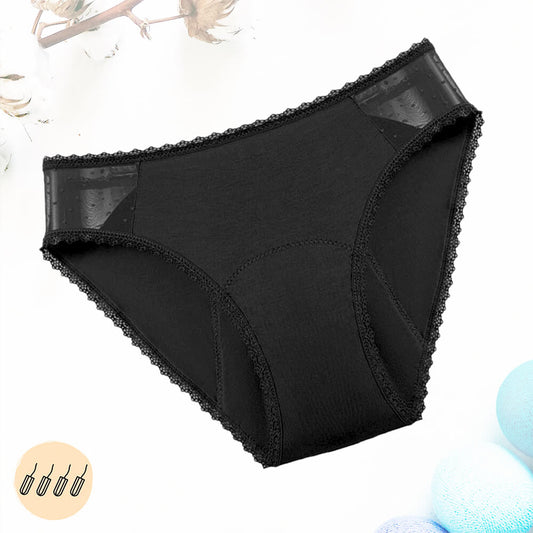
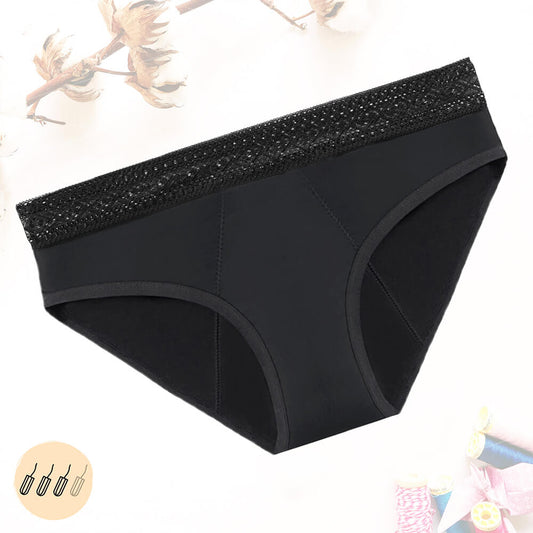
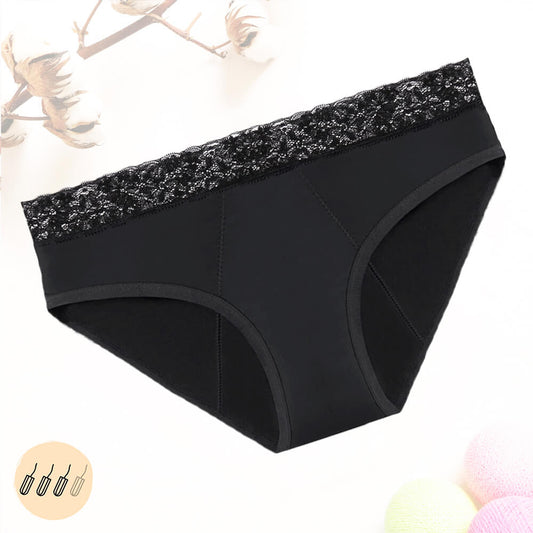
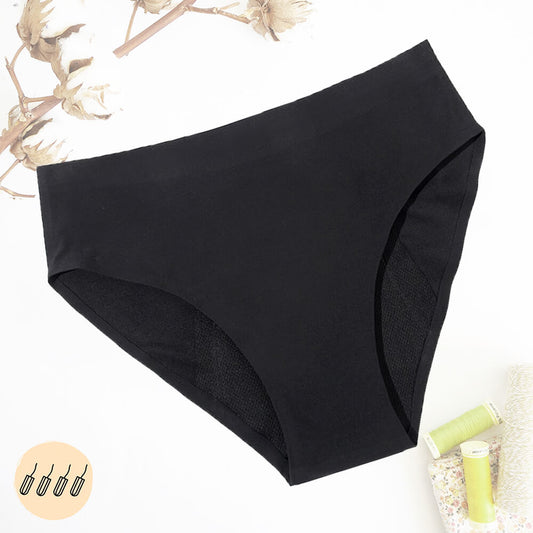
While you wait for the right treatment to take effect, you need reliable protection that won't let you down during the day. Our high-absorbency period panties are designed specifically for heavy periods, without leaks or that feeling of dampness.
You Don't Just Have to "Deal With It"
Having heavy periods is neither inevitable nor a trivial matter. It's a recognized and common medical condition that can be treated. Whether the cause is identified or not, there's an option suited to your situation, whether you're taking anticoagulants, are perimenopausal, or no clear explanation is ever found.
Keep track of your cycles before your next medical appointment, explicitly mention the real impact on your daily life, and don't hesitate to ask for blood tests if fatigue has set in. You have the right to get clear answers, no matter how long you've been living with this.
Sources & Scientific References
This article is based on official recommendations and recent medical publications.
- American College of Obstetricians and Gynecologists (ACOG). Heavy Menstrual Bleeding. ACOG.org
- National Institute for Health and Care Excellence (NICE). (2021, updated). Heavy menstrual bleeding, assessment and management. NICE Guideline No. 88.
- Munro MG, Critchley HOD, Fraser IS. (2018). The FIGO recommendations on terminologies and definitions for normal and abnormal uterine bleeding, PALM-COEIN classification. International Journal of Gynecology & Obstetrics.
- Hassan N, Schapkaitz E, et al. (2024). Incidence and Impact on Quality of Life of Heavy Menstrual Bleeding in Women on Oral Anticoagulant Therapy. Clinical and Applied Thrombosis/Hemostasis. DOI: 10.1177 / 10760296241281366
- Cohort study on oral anticoagulants and the risk of abnormal uterine bleeding. (2026). Medscape, reporting an increased risk particularly in women under 50 years of age.
Note: DOI links allow direct access to the original scientific publications.
Medical Warning: This article is for informational purposes only and is not a substitute for medical advice. If you experience signs of anemia or if your periods significantly affect your quality of life, consult a gynecologist.