
Vulvar Irritation: The Real Causes of Your Itching
It itches, and you don't know why. No visible fungal infection, no unusual discharge, just this recurring sensation that you can't explain. Vulvar itching affects almost all women at some point in their lives.and in the vast majority of cases, the cause lies in a fairly short list of possibilities, ranked here from most frequent to rarest.
We explain each cause, how to identify it, and especially when a simple irritation becomes a sign that really warrants a consultation.
💡 Key Takeaways
What's Really Happening in This Area

The vulva refers to the entire external genitalia, including the labia majora and minora, the clitoris, and the vaginal opening. Its skin is among the thinnest on the body, with a high density of nerve endings, which explains why even simple irritation is felt there much more intensely than elsewhere.
This area is also in constant contact with moisture, friction, and everything you put on it: underwear, sanitary pads, hygiene products. It's this combination that makes it particularly reactive skin, and explains why almost all women experience at least one episode of vulvar itching in their lifetime.
💬 Why does this come up so often?
A study published in the New England Journal of Medicine highlights that vulvar itching remains one of the most frequent reasons for gynecological consultation, and yet one of the most misunderstood by patients themselves, due to a lack of clear explanation on what distinguishes one cause from another.
The Causes, From Most Frequent to Most Rare
🔍 Itching Without Fungal Infection or Discharge: Understanding →
Life Moments That Increase the Risk

Certain periods naturally make the vulva more sensitive, without there necessarily being an infection or disease behind it.
Before menstruation
The drop in progesterone at the end of the cycle slightly alters the vaginal pH and the texture of secretions, which may be enough to cause temporary itching without any infection being involved.
During pregnancy
Increased blood flow to the pelvic area and hormonal fluctuations heighten the sensitivity of the vulvar skin. Yeast infections are also more common during this time, which is why it's important to talk to your midwife or gynecologist soon rather than waiting.
After a sexual rapport
Friction, lack of lubrication, latex in some condoms, or reaction to sperm in rare cases, can all trigger itching that appears a few hours after intercourse.
Symptoms That Help You Identify the Cause
🌿 How to Relieve an Itch Now →
When an Itch Deserves a Real Consultation
- This has persisted for more than two weeks despite the discontinuation of the suspected products.
- You notice white patches, cracks, or a change in skin color
- The itching is accompanied by pain during intercourse
- You are menopausal and this symptom is new
- A young girl complains of itching before puberty
A visual examination by a gynecologist or dermatologist is often sufficient to make a diagnosis, especially for lichen sclerosus, where the average delay in diagnosis exceeds several years, while early treatment significantly improves the prognosis.
A protection that doesn't add irritation
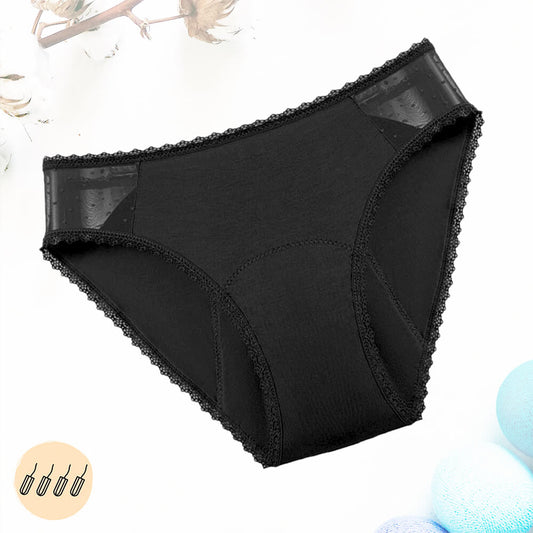
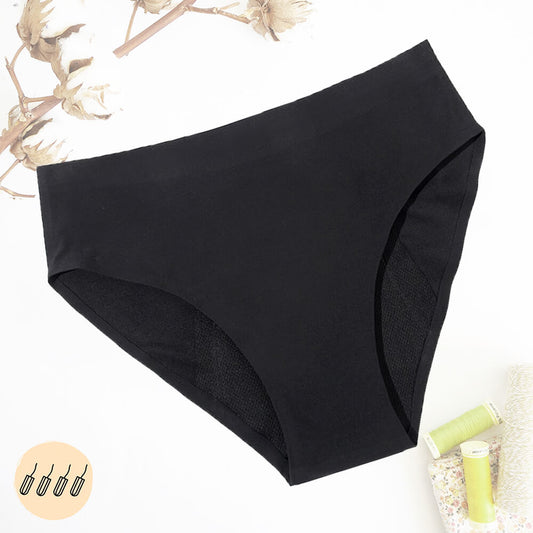
Sensitive skin deserves a material you forget you're wearing. Our bamboo period panties are soft, breathable, and comfortable even on days when everything else is getting on your nerves.
A Short List, A Probable Cause
Vulvar itching isn't a mystery. The vast majority of cases resolve by identifying the source of the irritation or treating a simple infection. What truly warrants a visit to the doctor is the duration of the itching, an unusual skin appearance, or the lack of any improvement despite taking the right steps.
If nothing in this list exactly matches your situation, or if you want a more precise examination depending on whether or not you have associated losses, the two supplementary articles above go into more detail on each case.
Sources & References
- Stewart KMA. (2020). Clinical Practice, Vulvar Pruritus. New England Journal of Medicine. DOI: 10.1056/NEJMcp1818085
- Brown DN, et al. (2020). Common Benign Chronic Vulvar Disorders. American Family Physician. AAFP.org
- Halonen P, et al. (2025). Pediatrician and adolescent vulvar lichen sclerosus, delay in diagnosis. European Journal of Pediatrics. PMC11890373
- Sherrard J, Wilson J, Donders G, Mendling W, Jensen JS. (2023). 2023 update to 2018 European (IUSTI/WHO) guideline on the management of vaginal discharge. International Journal of STD & AIDS. DOI: 10.1177 / 09564624231179277
Note: This article is informative and does not replace the advice of a gynecologist or dermatologist.