
Toxic Shock Syndrome: Better Understanding for Better Protection
If you think that menstrual cups are safer than tampons in the face of toxic shock syndrome, you are not alone. 81% of French women believe that at least one type of feminine hygiene product presents a risk, and the menstrual cup is perceived as the safest of all.According to an ANSES survey, however, a French study directly tested the issue in the laboratory. Its conclusion is unequivocal: there is no proof that menstrual cups are safer than tampons; both require the same precautions.
We take stock of what we really know about menstrual toxic shock syndrome, what triggers it, the real figures, and the new regulations that came into effect in 2024.
The signs that do not forgive delay
A sudden fever above 39°C during your period
Vomiting or diarrhea that accompany this fever
A rash that looks like sunburn
Remove your internal protection and seek immediate medical attention.
Make sure you specify that you are menstruating.
How Does It Really Start?

Toxic shock syndrome is not a typical infection. Three conditions must be present simultaneously for it to occur, which explains why it remains rare despite the widespread use of internal menstrual products.
1. Carry a toxin-producing strain · about 1% of women harbor in their vagina a strain of Staphylococcus aureus capable of producing the TSST-1 toxin, without this causing them any problems on a daily basis.
2. Use internal protection Tampons or menstrual cups create an environment where blood stagnates, which promotes bacterial growth and toxin production.
3. Lack of protective antibodies The majority of women naturally develop antibodies throughout their lives that are capable of neutralizing the TSST-1 toxin. This is one of the reasons why toxic shock syndrome mainly affects adolescent girls and young women, who have not yet had time to develop them.
Once these three conditions are met, the toxin produced in the vagina enters the bloodstream and triggers a widespread inflammatory reaction, capable of reaching the liver, kidneys and nervous system in just a few days.
Tampon or Cup: The Myth to Correct
This is the point that most content on the subject never clearly addresses. Researchers have tested several tampons and menstrual cups on the market in the laboratory, under conditions close to real-life use, to measure bacterial growth and toxin production on each type of product.
As a result, bacterial growth and toxin production were higher with menstrual cups than with tampons, likely due to the additional air introduced by the cup's shape. The researchers are explicit in their conclusion: there is no evidence that menstrual cups are safer than tampons, and they require similar precautions.
This isn't a reason to stop using menstrual cups, which remain an excellent choice for many women. It is a reason not to relax precautions just because you've stopped using tampons. Duration of use, hand hygiene, washing the device—the same rules apply to both.
The Real Numbers, Not Always the Ones We Hear
Toxic shock syndrome received a media peak in the 1980s in the United States, with around 10 cases per 100,000 young women each year. The incidence has since fallen sharply, thanks to changes in the composition of tampon fibers. But the subject remains poorly understood statistically, even today.
The discrepancy is easily explained: toxic shock syndrome is not a notifiable disease in France. The actual number of cases therefore remains an estimate, not an exact count. This statistical ambiguity is itself an argument for individual prevention; we cannot rely on official alerts to know if the risk is increasing locally.
What Really Increases the Risk
A French study compared the wearing habits of women who had experienced toxic shock syndrome with those of women who had never experienced it, to understand precisely what makes the difference.
Wearing a tampon for more than 6 hours doubles the risk of toxic shock.
Wear it all night This risk triples.
Another finding of this study deserves attention: among the women affected, only 38% had received information about toxic shock syndrome before their first tampon use, and barely 5% of those who had received information knew how to recognize the early signs or what to do. The problem, therefore, is not only individual behavior, but also a lack of information affecting the majority of users.
What Has Changed Since April 2024
France has strengthened its regulations on the information given to users, a recent change that much online content has not yet incorporated.
Since April 1, 2024, a decree requires all manufacturers of feminine hygiene products—tampons, menstrual cups, pads, and period underwear—to include on the packaging or instructions the complete composition of the product, precautions for use, and, for internal products, a full description of the symptoms of toxic shock syndrome (TSS) and the steps to take if it occurs. The maximum recommended wearing time, set at 6 hours, must now be clearly stated on every box.
💡 What this changes in concrete terms
If you buy tampons or a menstrual cup today that comply with this regulation, information about toxic shock syndrome is no longer optional. If your current box doesn't mention it, it was probably put on the market before the regulation came into effect.
Best Practices That Really Make a Difference
By combining regulations and the results of the studies cited above, a few simple actions concentrate the essentials of possible prevention.
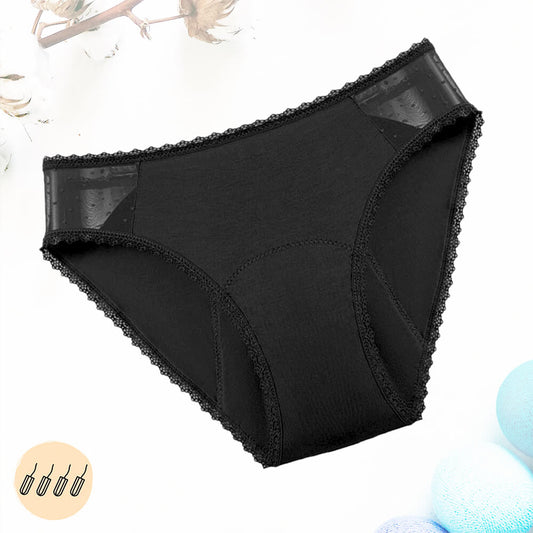
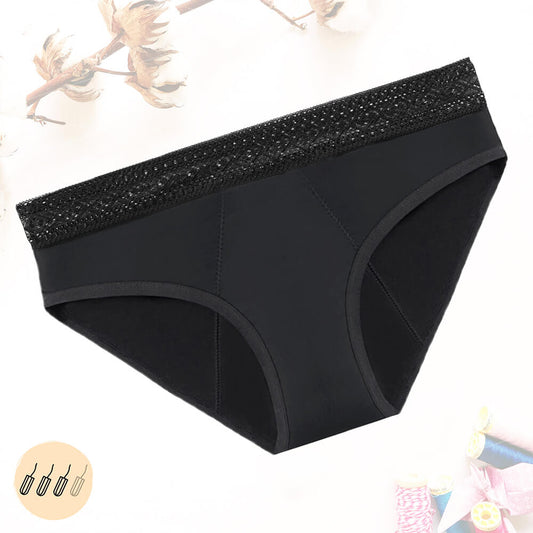
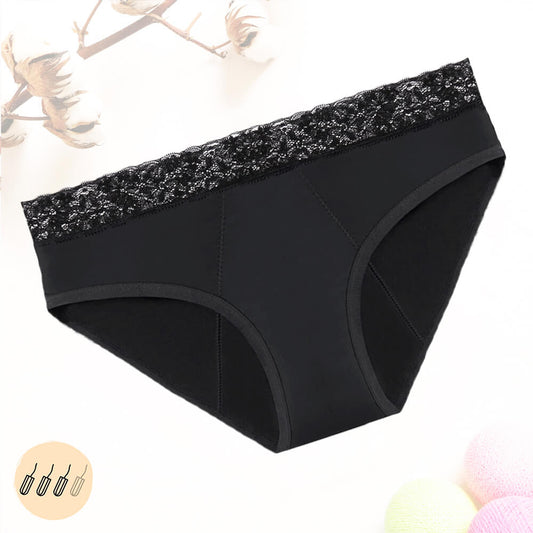
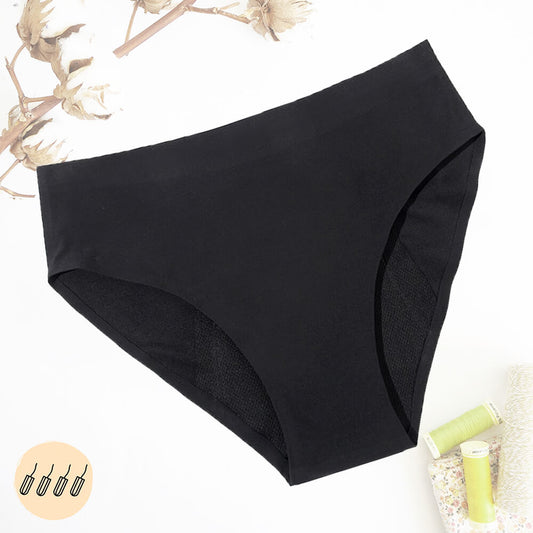
Menstrual underwear, as external protection, avoids this mechanism of internal stagnation since it is never inserted into the vagina. For nights or periods when you prefer not to monitor wearing time, they offer an option without this specific risk.
External Protection for Nights Without a Care
Our Period Panties offer absorbent external protection, without the wearing time constraints associated with internal protection.
Frequently Asked Questions
The Most Important Things to Remember
Toxic shock syndrome remains rare, but it likely affects more women than official figures suggest, and menstrual cups are not the risk-free protection they are often perceived to be. True prevention involves a few simple steps: respecting the recommended 6-hour wear time, never wearing internal protection overnight, and recognizing the early signs so you can act quickly if they appear.
For further
This guide provides an overview. Three topics deserve further exploration.
🥤 Menstrual Cup and Toxic Shock Syndrome →
The study directly compares menstrual cups and tampons, and explains how to properly clean your cup between cycles.
🚨 Symptoms and What to Do →
The signs to watch for, the priority action to take, and what happens in the emergency room.
📊 Comparison of All Protective Equipment →
Pad, cup, disc, sponge, external, the comparative risk for each type of protection.
Sources & References
- Billon A, Gustin MP, Tristan A, et al. (2020). Association of characteristics of tampon use with menstrual toxic shock syndrome in France. EclinicalMedicine. DOI: 10.1016/j.eclinm.2020.100308
- Nonfoux L, Chiaruzzi M, Badiou C, et al. (2018). Impact of Currently Marketed Tampons and Menstrual Cups on Staphylococcus aureus Growth and Toxic Shock Syndrome Toxin 1 Production In Vitro. Applied and Environmental Microbiology. DOI: 10.1128/AEM.00351-18
- Decree No. 2023-1427 of December 30, 2023 relating to information on certain intimate protection products. Légifrance. Légifrance
- Are feminine hygiene products safe for women? ANSES. ANSES
- Gottlieb M, Long B, Koyfman A. (2018). The Evaluation and Management of Toxic Shock Syndrome in the Emergency Department, A Review of the Literature. The Journal of Emergency Medicine. DOI: 10.1016/j.jemermed.2017.12.048
Note: This article is for informational purposes only and is not a substitute for professional medical advice.